
What Is Robotic Knee Replacement?
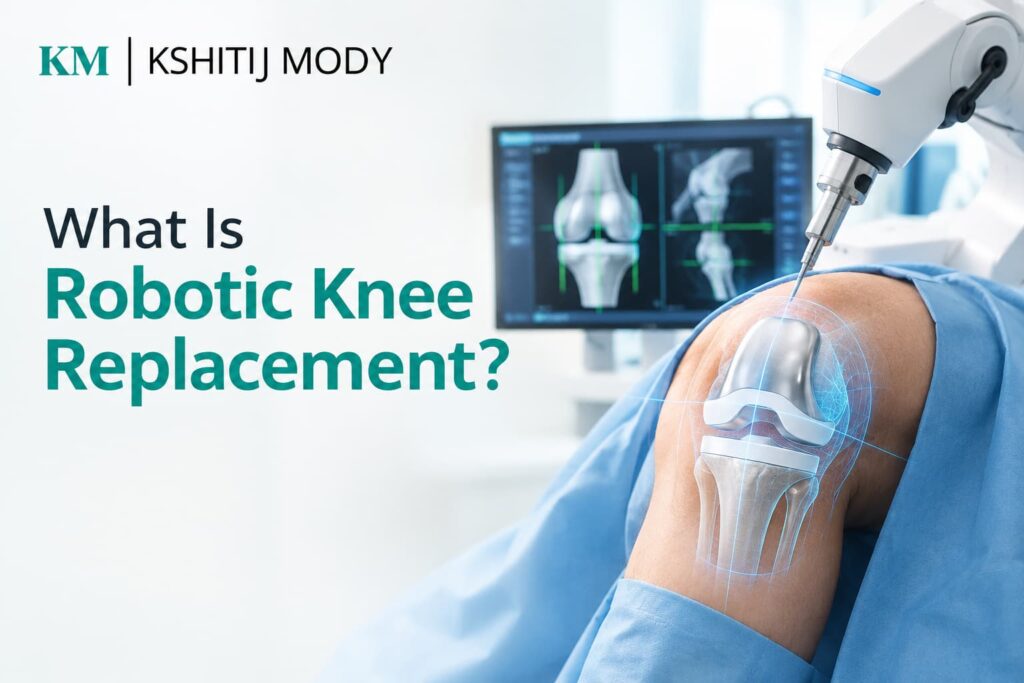
If knee pain has started limiting your walks, stairs, or sleep, you may have heard that knee replacement can now be done with a robot. That naturally raises questions. Does a robot perform the surgery? Is it safer? Is it right for you?
This guide explains robotic knee replacement in plain language, so you can talk to your surgeon with confidence.
What Is Robotic Knee Replacement?
Robotic knee replacement, also called robot-assisted knee arthroplasty, is a form of total knee replacement or partial knee replacement. The surgeon uses a robotic system and 3D planning software to guide bone preparation and implant positioning with high precision.
The goal is the same as in conventional surgery: remove the damaged joint surfaces and replace them with a smooth artificial implant. The difference is in how accurately the plan is made and carried out.
The robot does not operate on its own. Your surgeon makes every decision and controls the procedure. The robot is a tool that helps the surgeon follow a personalised plan more accurately.
How Does Robotic Knee Replacement Work?
The process has three main stages.
1. 3D Planning Before Surgery
A scan of your knee, or measurements taken during surgery depending on the system, is used to build a 3D model of your joint. The surgeon uses it to plan:
- How much bone needs to be removed
- The size and position of the implant
- The alignment of the leg
- How the ligaments should be balanced
This is similar to a virtual rehearsal of the surgery. At Dr. Kshitij Mody’s practice, this approach is part of the 3D robotic technology used for personalised joint replacement planning.
2. Guided Surgery
During the operation, the system tracks your knee’s position in real time. It helps the surgeon cut bone within the planned boundaries and avoid removing healthy tissue unnecessarily.
3. Real-Time Adjustments
Before the final implant is fixed, the surgeon can check how the knee moves and how the ligaments feel. Adjustments can be made on the spot to improve balance and stability.
| Feature | Conventional | Robotic-Assisted |
|---|---|---|
| Planning | Based on X-rays and surgeon experience | Detailed 3D, patient-specific plan |
| Bone Cuts | Made using mechanical guides | Guided within planned limits |
| Implant Alignment | Depends on manual instruments | Measured and verified in real time |
| Soft Tissue Balancing | Assessed by feel | Assessed by feel plus data |
| Surgeon's Role | Full control | Full control, with added precision |
Potential Benefits of Robotic Knee Replacement
- Greater precision. Studies show robotic systems can improve the accuracy of implant positioning and limb alignment.
- Bone preservation. Controlled cuts help remove only what is needed.
- Better ligament balance. A well-balanced knee often feels more natural.
- Personalised surgery. The plan reflects your anatomy rather than a standard template.
- Potentially smoother early recovery. Some patients report less pain and quicker mobility in the first weeks, though results vary from person to person.
An honest note: robotic technology improves accuracy. Long-term studies are still comparing implant lifespan and overall outcomes with conventional surgery. The surgeon’s skill and experience remain the most important factors.
Who Is a Good Candidate?
Robotic knee replacement may suit you if:
- You have advanced knee arthritis causing pain and stiffness
- Medicines, physiotherapy, and injections no longer give enough relief
- Daily activities like walking, climbing stairs, or sitting cross-legged are difficult
- You have a deformity such as bow legs or knock knees
- You need a partial knee replacement where precision is especially important
Not sure whether it’s time? Read our guide on when to consider knee replacement.
Robotic assistance can also help in complex cases, such as revision knee replacement or severe deformities. Your surgeon will advise whether it’s appropriate for your knee.
What Happens During the Procedure?
- Pre-operative evaluation. Examination, X-rays, scans if needed, and fitness checks.
- Anaesthesia. Spinal or general anaesthesia, as decided with your anaesthetist.
- Surgery. The damaged cartilage and bone are removed using robotic guidance, and the implant is fitted.
- Balance check. Movement and stability are assessed before closing.
The surgery usually takes around one to two hours. If you’re wondering about the seriousness of the procedure, see our article: Is knee replacement major surgery?
Recovery After Robotic Knee Replacement
Recovery depends on your age, health, and commitment to rehabilitation. In general:
- Day 0–1: Most patients are encouraged to stand and take a few steps with support.
- Hospital stay: Typically a few days.
- First 2–6 weeks: Physiotherapy to regain bending, straightening, and strength. Walking aids are usually needed at first.
- 6–12 weeks: Many patients return to light daily activities.
- 3–6 months: Strength and confidence continue to improve.
Following your physiotherapy plan closely makes a big difference to the final result.
Risks to Be Aware Of
Robotic knee replacement is a well-established approach, but like any surgery it carries risks, including infection, blood clots, stiffness, implant-related problems, and anaesthesia risks. Robotic assistance does not remove these risks, but careful planning, a skilled surgeon, and good post-operative care help keep them low.
Common Myths
“A robot does the surgery by itself.” No. The surgeon is in control throughout.
“Robotic surgery has no risks.” No surgery is risk-free.
“Robotic surgery means a tiny cut and instant recovery.” The robot improves precision. It doesn’t replace the need for rehabilitation.
“Only complicated cases need it.” It can be used for primary knee replacements as well as complex cases.
Are There Alternatives?
Not everyone with knee pain needs a replacement. Depending on your condition, options may include:
- Physiotherapy and weight management
- PRP therapy or stem cell therapy for early arthritis
- Knee arthroscopy for certain injuries
- Meniscus repair or ACL reconstruction for sports injuries
If your knee pain began at a younger age, you may also find this useful: joint pain in young adults.
Choosing the Right Surgeon Matters
Technology helps, but the surgeon’s judgement, experience, and planning are what truly shape the outcome. Look for a surgeon who explains your options honestly, including when surgery is not needed. You can learn more about Dr. Kshitij Mody, read real patient success stories, or see our guide to choosing a joint replacement surgeon.
Frequently Asked Questions
Is robotic knee replacement better than conventional surgery?
It can improve precision in planning and implant placement. Whether it suits you depends on your knee condition, and your surgeon can advise on this.
Is robotic knee replacement painful?
Some pain is expected after any joint replacement, but modern pain control methods make it manageable for most patients.
How long does a robotic knee implant last?
Modern knee implants commonly last 15–20 years or longer, depending on activity level, body weight, and surgical factors.
Can both knees be replaced together?
In selected patients, yes. Your surgeon will assess whether it is safe for you.
When can I walk after surgery?
Most patients begin walking with support within a day of surgery.
Is it suitable for older patients?
Age alone is not a barrier. Overall health and fitness matter more.
Take the Next Step
If knee pain is affecting your quality of life, an expert evaluation can help you understand your options and decide what’s right for you. Explore more helpful resources in our patient education section, or book a consultation with Dr. Kshitij Mody at Welcare Hospital, Vadodara.