
What Is Knee Arthroscopy? A Complete Guide to the Procedure, Recovery & Benefits
Knee pain can make simple activities such as walking, climbing stairs, squatting, or exercising difficult. While mild knee problems may improve with rest, physiotherapy, or medication, some conditions may require a closer look inside the joint. Knee arthroscopy is a minimally invasive surgical procedure that allows an orthopedic surgeon to examine and treat certain knee problems through small incisions.
Unlike major procedures such as total knee replacement, arthroscopy is generally used to diagnose or treat specific problems affecting the structures inside the knee. Understanding when it is recommended, what happens during the procedure, and how recovery works can help patients make informed decisions with their orthopedic surgeon.
What Is Knee Arthroscopy?
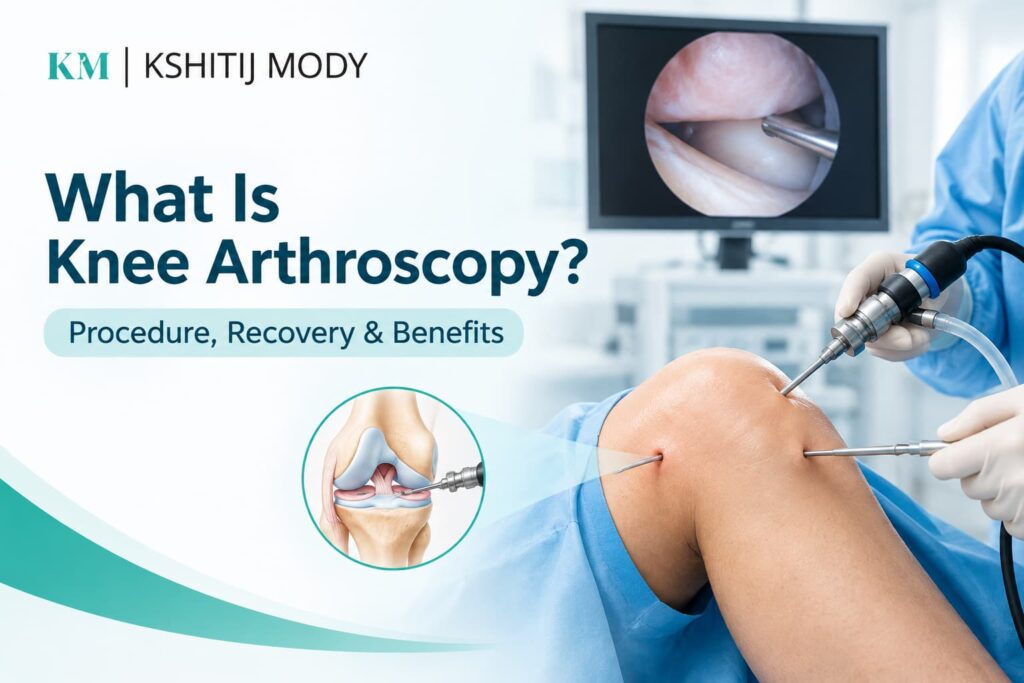
Knee arthroscopy is a minimally invasive procedure in which an orthopedic surgeon uses a small camera called an arthroscope to view the inside of the knee joint.
The arthroscope is inserted through a small incision near the knee. It has a light and camera that sends magnified images to a monitor, allowing the surgeon to examine structures such as:
- Meniscus
- Cartilage
- Ligaments
- Joint lining
- Kneecap and surrounding structures
Additional small instruments can be inserted through separate incisions when treatment is required.
Because arthroscopy uses small incisions instead of opening the entire knee joint, it may involve less tissue disruption than traditional open surgery.
Why Is Knee Arthroscopy Done?
Knee arthroscopy may be recommended when symptoms suggest an internal knee problem that needs further assessment or treatment.
Common reasons for knee arthroscopy include:
Meniscus Tears
The meniscus acts as a cushion between the thighbone and shinbone. Sports injuries, twisting movements, or age-related changes can cause a meniscus tear. Depending on the type and location of the tear, arthroscopy may be used to repair or trim the damaged tissue.
ACL and Other Ligament Injuries
Certain ligament injuries, particularly ACL tears, may require arthroscopic reconstruction. The decision depends on factors such as the patient’s activity level, age, knee stability, and extent of the injury.
Damaged Cartilage
Knee cartilage can become damaged due to injury or degeneration. Arthroscopy may help assess the extent of cartilage damage and, in selected cases, allow the surgeon to perform a suitable treatment.
Loose Bodies in the Knee
Small pieces of cartilage or bone can sometimes become loose inside the joint. These fragments may cause pain, swelling, catching, or locking. Arthroscopy can be used to locate and remove them.
Persistent Knee Symptoms
When symptoms such as swelling, locking, clicking, or persistent pain continue despite conservative treatment, an orthopedic surgeon may consider arthroscopy after evaluating the underlying cause.
What Conditions Can Knee Arthroscopy Treat?
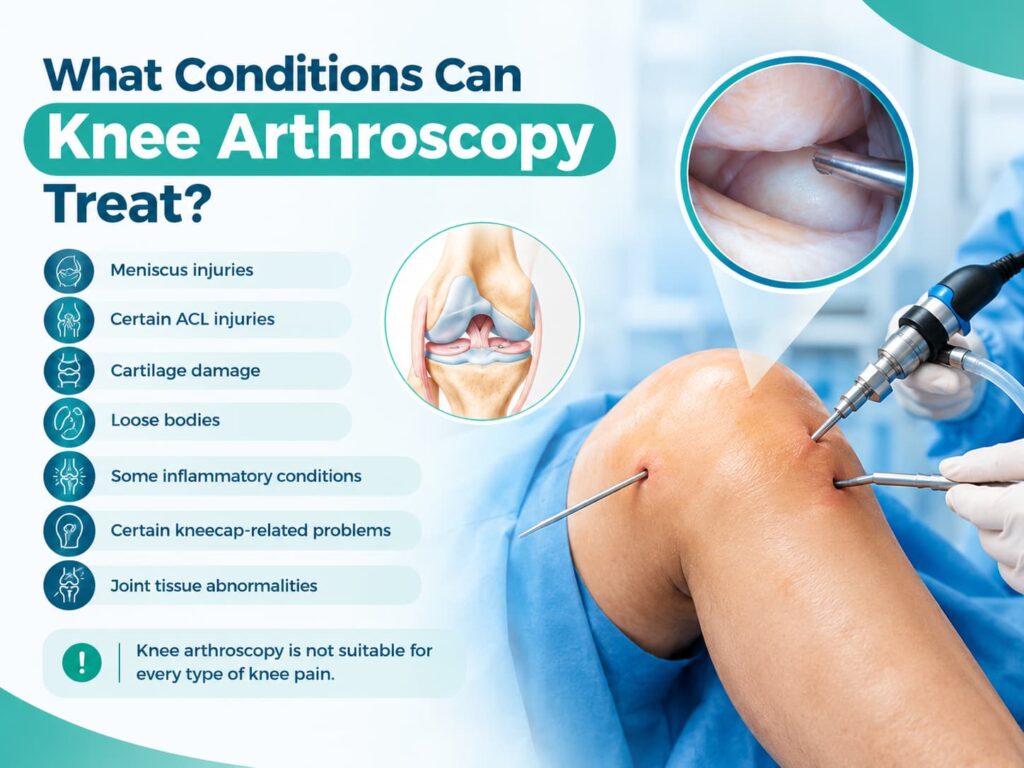
Knee arthroscopy can be used for selected conditions involving the internal structures of the knee. These may include:
- Meniscus injuries
- Certain ACL injuries
- Cartilage damage
- Loose bodies
- Some inflammatory conditions
- Certain kneecap-related problems
- Joint tissue abnormalities
However, knee arthroscopy is not suitable for every type of knee pain. A detailed clinical examination and appropriate imaging may be required before deciding whether surgery is appropriate.
How Is Knee Arthroscopy Performed?
Before the procedure, the orthopedic surgeon evaluates the patient’s symptoms, medical history, physical examination findings, and imaging reports.
During arthroscopy, anesthesia is administered based on the procedure and the patient’s circumstances. The surgeon then:
- Makes a small incision around the knee.
- Inserts the arthroscope into the joint.
- Examines the internal structures using the camera.
- Makes additional small incisions if surgical instruments are needed.
- Repairs or removes damaged tissue when appropriate.
- Removes the instruments and closes the small incisions.
The exact procedure varies depending on the condition being treated.
Is Knee Arthroscopy a Major Surgery?
Knee arthroscopy is generally considered a minimally invasive orthopedic procedure, but that does not mean every arthroscopic surgery is minor.
The complexity depends on what needs to be treated. For example, an arthroscopic procedure for a meniscus problem may differ considerably from ACL reconstruction performed using arthroscopic techniques.
Patients often compare arthroscopy with knee replacement. If you are wondering about the scale and recovery involved in replacement surgery, you can also read about the extent and seriousness of knee replacement surgery to understand how the procedures differ.
What Is the Difference Between Knee Arthroscopy and Knee Replacement?
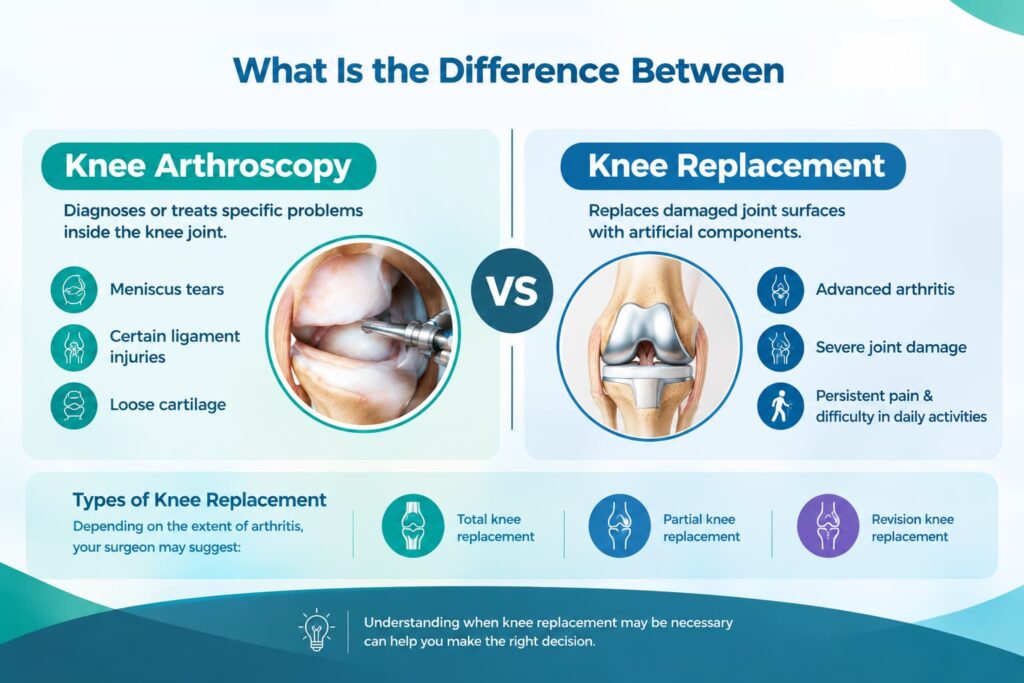
Knee arthroscopy and knee replacement are performed for different reasons.
Knee arthroscopy generally focuses on diagnosing or treating specific problems inside the knee joint, such as meniscus tears, certain ligament injuries, or loose cartilage.
Knee replacement, on the other hand, involves replacing damaged joint surfaces with artificial components. It is usually considered when advanced arthritis or severe joint damage causes persistent pain and difficulty with daily activities despite non-surgical treatment.
Depending on the extent of arthritis, an orthopedic surgeon may discuss options such as:
Patients considering replacement surgery may also benefit from understanding when knee replacement may become necessary.
Can Knee Arthroscopy Help With Arthritis?
This is an important question because knee arthroscopy is sometimes assumed to be a treatment for all types of arthritis.
For advanced knee osteoarthritis, routine arthroscopy is generally not considered a replacement for appropriate arthritis management or knee replacement when replacement is indicated. The usefulness of arthroscopy depends on the specific problem causing symptoms.
For example, if a patient with arthritis also has a separate problem such as a symptomatic meniscus tear or loose body, the orthopedic surgeon may evaluate whether arthroscopy has a role.
The treatment decision should therefore be based on the patient’s symptoms, examination, imaging, age, activity level, and overall knee condition.
What Are the Benefits of Knee Arthroscopy?
Potential benefits of knee arthroscopy can include:
- Smaller surgical incisions
- Less disruption to surrounding tissues
- Direct visualization of the knee joint
- Treatment of certain internal knee problems
- Potentially faster early recovery than some open procedures
However, outcomes vary depending on the condition being treated and the type of arthroscopic procedure performed.
What Is Recovery Like After Knee Arthroscopy?
Recovery depends largely on the procedure performed.
Some patients may be able to walk relatively soon after a simpler arthroscopic procedure, while others may require crutches, restricted weight-bearing, or a longer rehabilitation program.
Recovery may include:
- Rest and swelling control
- Pain management
- Gradual return to movement
- Physiotherapy or prescribed exercises
- Progressive weight-bearing when permitted
- Follow-up appointments
Returning to sports or strenuous activity should only be done according to the orthopedic surgeon’s recommendations.
What Are the Possible Risks of Knee Arthroscopy?
Although knee arthroscopy is commonly performed, it still carries potential risks. These can include infection, bleeding, blood clots, stiffness, swelling, nerve or blood vessel injury, or continued symptoms.
The risks vary according to the patient’s health and the specific procedure being performed. Your orthopedic surgeon can explain the expected benefits and potential complications before surgery.
When Should You See an Orthopedic Surgeon for Knee Pain?
Consider consulting an orthopedic surgeon if knee pain is persistent, worsening, or interfering with everyday activities. Evaluation may be particularly important when symptoms include:
- Repeated knee swelling
- Knee locking or catching
- Difficulty fully bending or straightening the knee
- Instability or the feeling that the knee may give way
- Pain after a sports injury
- Persistent pain despite conservative treatment
Early assessment can help identify whether the problem can be managed without surgery or whether a surgical option needs to be considered.
Final Thoughts
Knee arthroscopy is a minimally invasive technique that can help orthopedic surgeons diagnose and treat selected problems inside the knee. It may be useful for conditions such as meniscus tears, certain ligament injuries, cartilage problems, and loose bodies, but it is not the right treatment for every knee condition.
If knee pain is affecting your mobility or daily routine, an evaluation by an experienced orthopedic surgeon can help identify the underlying cause and determine whether physiotherapy, medication, injections, arthroscopy, or another surgical option is appropriate. For patients with advanced joint damage, treatment may instead involve partial or total knee replacement, while revision surgery may be considered when an existing knee replacement develops a problem.
Frequently Asked Questions About Knee Arthroscopy
Is knee arthroscopy painful?
Some discomfort and swelling can occur after knee arthroscopy. Pain management, rest, ice, and rehabilitation are commonly part of recovery. The level of discomfort depends on the procedure performed and the individual’s response to surgery.
How long does it take to recover from knee arthroscopy?
Recovery time varies depending on the condition treated. Some people resume normal daily activities relatively quickly, while procedures such as ligament reconstruction require a much longer rehabilitation period.
Can I walk after knee arthroscopy?
Some patients can walk soon after surgery, sometimes with support. However, weight-bearing instructions depend on the specific procedure, so patients should follow their orthopedic surgeon’s advice.
Is knee arthroscopy better than knee replacement?
They are not alternatives for the same conditions. Arthroscopy is generally used for selected internal knee problems, whereas knee replacement is used to replace severely damaged joint surfaces, often due to advanced arthritis.
Does knee arthroscopy treat knee arthritis permanently?
Knee arthroscopy does not permanently reverse arthritis. Its usefulness depends on the specific problem inside the knee. Advanced osteoarthritis may require other treatment approaches, including knee replacement in appropriate cases.
When should I see an orthopedic surgeon for knee pain?
You should consider an orthopedic evaluation if knee pain persists, affects daily activities, causes swelling or locking, or follows an injury. The surgeon can determine the cause and recommend suitable treatment options.