
Is Knee Replacement a Major Surgery? What Every Patient Should Know
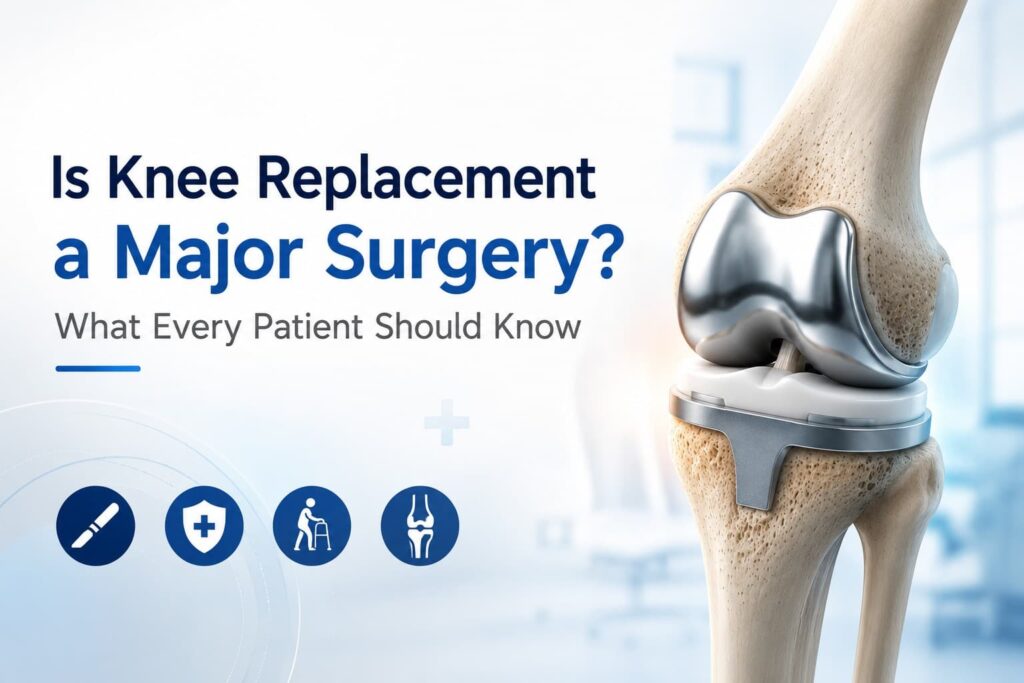
If your knee pain has reached the point where climbing stairs, walking to the market, or even sitting cross-legged feels impossible, chances are your doctor has already mentioned knee replacement surgery. And the first question that comes to almost every patient’s mind is simple: is knee replacement a major surgery?
It’s a fair question to ask before trusting someone with your joint. The honest answer is yes, knee replacement is classified as a major orthopedic surgery, but that doesn’t mean it should worry you the way the phrase “major surgery” often suggests. With modern surgical techniques, experienced surgeons, and structured rehabilitation, it is one of the most predictable and successful procedures in all of orthopedics.
This guide breaks down exactly why knee replacement is considered major, what actually happens during the procedure, how safe it really is, and what recovery looks like so you can make an informed decision rather than a fearful one.
What Is Knee Replacement Surgery?
Knee replacement surgery, medically known as knee arthroplasty, is a procedure where damaged cartilage and bone in the knee joint are removed and replaced with an artificial implant made of metal and medical-grade plastic.
The goal isn’t just pain relief. It’s restoring the mechanical function of the knee so you can walk, bend, and move without the grinding, locking, or swelling caused by worn-out cartilage.
Knee replacement is typically recommended when knee arthritis or joint damage has progressed to a stage where medications, injections, and physiotherapy no longer provide lasting relief. It is not the first line of treatment. It is usually considered after conservative options have been tried and have stopped working.
Why Knee Replacement Falls Under Major Surgery
Yes, knee replacement surgery is considered a major surgery because it involves cutting bone, removing damaged joint surfaces, and implanting a prosthetic device under general or spinal anesthesia. Any surgery that involves anesthesia, bone alteration, and a structured recovery period falls under the category of major surgery in medical terms.
However, “major” refers to the surgical classification, not necessarily the danger level. Many procedures classified as major surgery, including gallbladder removal or cataract surgery with complications, are performed routinely with high success rates and low risk when done by a skilled surgeon.
Total knee replacement is one of the most studied and refined procedures in orthopedic surgery today, with decades of clinical data supporting its safety and effectiveness.
Why Is It Considered a Major Procedure?
A few clinical factors place knee replacement in the major surgery category:
- It requires anesthesia, either spinal or general
- Bone is cut and reshaped to fit the implant precisely
- The surgery typically lasts one to two hours
- Hospital admission and monitoring are required afterward
- A structured rehabilitation phase follows the procedure
None of these factors make the surgery unsafe. They simply mean it requires proper pre-surgical evaluation, an experienced surgical team, and a recovery plan, all of which are standard practice today.
Why Might Someone Need Knee Replacement Surgery?
Knee replacement becomes necessary when the natural cushioning inside the knee joint, called cartilage, wears away and bone begins rubbing against bone. This is most commonly caused by:
- Osteoarthritis knee, the most common reason for knee replacement
- Rheumatoid arthritis affecting the joint lining
- Post-traumatic arthritis following an old injury or fracture
- Long-standing knee joint damage from deformities like bow legs
- Avascular necrosis, where bone tissue loses blood supply
In most cases, the decision isn’t sudden. It develops gradually as chronic knee pain starts interfering with sleep, mobility, and independence.
Common Symptoms That Indicate Knee Replacement May Be Needed
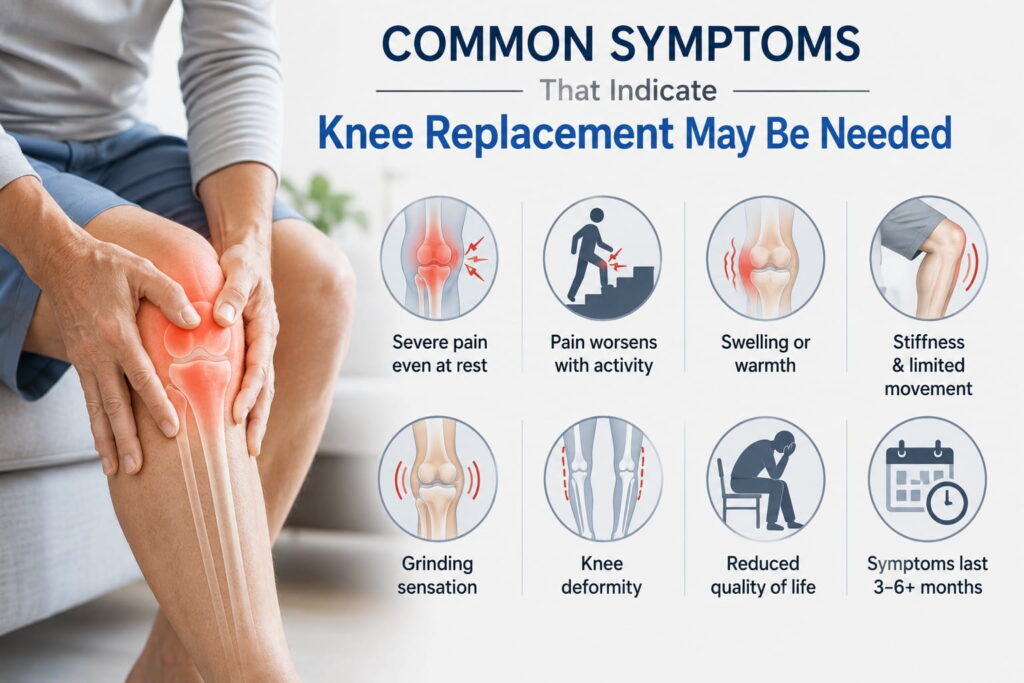
Not every knee pain requires surgery. But certain warning signs suggest that joint damage has progressed beyond what medication or physiotherapy alone can manage.
- Severe knee pain that persists even at rest
- Pain that worsens with walking, climbing stairs, or standing for long periods
- Visible swelling or a warm sensation around the joint
- Stiffness that limits bending or straightening the knee
- A grinding or grating feeling during movement
- Knee deformity, such as bowing outward or inward
- Reduced quality of life due to limited mobility
If these symptoms sound familiar and have lasted more than three to six months despite treatment, it’s time to consult a knee specialist rather than continuing to manage pain on your own.
Who Is a Good Candidate for Knee Replacement?
Age alone doesn’t determine candidacy. What matters more is the extent of joint damage, pain severity, and how much daily function has been affected.
Good candidates for knee replacement typically include patients who:
- Have advanced knee arthritis confirmed through X-rays or MRI
- Experience chronic knee pain unresponsive to medication, injections, or physiotherapy
- Have difficulty walking, standing, or performing daily activities
- Are in reasonably good overall health to tolerate surgery and anesthesia
- Understand that rehabilitation is part of the recovery process, not optional
An experienced orthopedic doctor will also evaluate bone quality, weight, muscle strength, and any existing medical conditions before confirming that surgery is the right step. This is why a proper clinical evaluation matters more than self-diagnosis based on symptoms alone.
Types of Knee Replacement Surgery

Not every patient needs the same type of procedure. The extent of joint damage determines which approach is most suitable.
Total Knee Replacement
This involves resurfacing the entire knee joint, including the femur, tibia, and often the kneecap. It’s recommended when arthritis has affected the whole joint rather than just one section. Patients exploring Total Knee Replacement are usually those with widespread cartilage loss across the knee.
Partial Knee Replacement
If only one part of the knee, commonly the inner side, is damaged while the rest remains healthy, a partial replacement may be sufficient. This preserves more of the natural joint and ligaments, often leading to a quicker recovery. Patients considering Partial Knee Replacement typically have localized arthritis rather than joint-wide damage.
Revision Knee Replacement
Implants don’t last forever. Over years, wear, loosening, or infection can require replacing the original implant with a new one. This is a more complex procedure than the first surgery and requires a surgeon experienced in handling revision cases. Patients needing Revision Knee Replacement should specifically look for a surgeon with dedicated experience in complex, revision-level joint reconstruction.
Robotic Knee Replacement
Robotic-assisted knee replacement uses computer-guided precision to plan implant positioning based on the patient’s unique knee anatomy. It doesn’t replace the surgeon’s skill but supports more accurate bone cuts and implant alignment, which can contribute to better long-term joint function.
Knee Replacement Surgery in Vadodara
Patients in Vadodara now have access to advanced orthopedic care that was once only available in larger metro cities. From digital imaging and pre-surgical planning to robotic-assisted techniques and structured physiotherapy programs, knee replacement surgery in Vadodara has evolved significantly over the past decade.
Choosing local, experienced orthopedic care also means easier follow-up visits, faster access during recovery, and continuity of care from the same surgical team that performed your procedure, all of which matter more than patients often realize during the healing phase.
Benefits of Knee Replacement Surgery
While the idea of surgery can feel intimidating, the benefits of knee replacement are well documented and often life-changing for patients with advanced arthritis.
- Significant reduction in chronic knee pain
- Improved mobility and ability to walk without support
- Better sleep quality due to reduced night-time pain
- Correction of knee deformities like bowing
- Return to daily activities such as walking, light exercise, and travel
- Long-term implant durability, with modern implants often lasting 20 years or more
The knee replacement success rate remains one of the highest among major orthopedic procedures, with the vast majority of patients reporting substantial pain relief and improved function within a few months of surgery.
Risks and Possible Complications
Like any major surgery, knee replacement carries some risks, though serious complications are uncommon when the procedure is performed by an experienced joint replacement surgeon in a well-equipped hospital.
Potential knee replacement risks include:
- Infection at the surgical site
- Blood clots in the leg veins
- Stiffness or limited range of motion
- Implant loosening over time
- Nerve or blood vessel irritation
- Reaction to anesthesia
Most of these risks are minimized through proper pre-surgical screening, sterile surgical protocols, blood clot prevention medication, and early post-operative mobilization. Discussing your specific health history with your orthopedic specialist helps identify and reduce individual risk factors beforehand.
Recovery After Knee Replacement Surgery
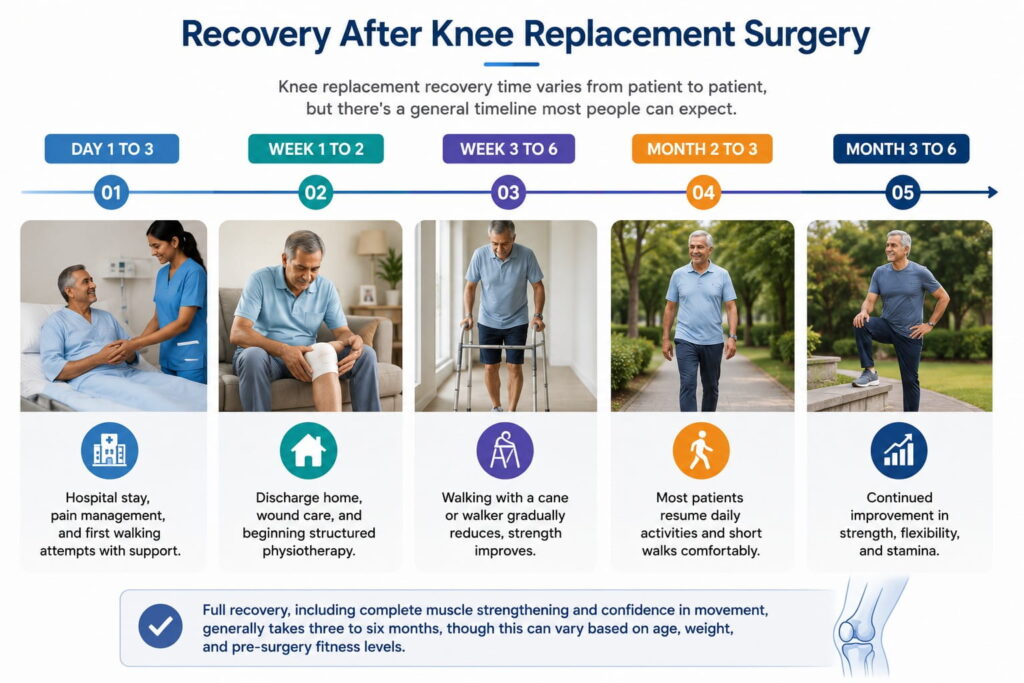
Knee replacement recovery time varies from patient to patient, but there’s a general timeline most people can expect.
- Day 1 to 3: Hospital stay, pain management, and first walking attempts with support
- Week 1 to 2: Discharge home, wound care, and beginning structured physiotherapy
- Week 3 to 6: Walking with a cane or walker gradually reduces, strength improves
- Month 2 to 3: Most patients resume daily activities and short walks comfortably
- Month 3 to 6: Continued improvement in strength, flexibility, and stamina
Full recovery, including complete muscle strengthening and confidence in movement, generally takes three to six months, though this can vary based on age, weight, and pre-surgery fitness levels.
How Painful Is Recovery?
Post-surgical discomfort is expected, especially in the first week, but it’s actively managed with pain medication and is far less intense than the chronic pain many patients experienced before surgery. Most patients describe the recovery discomfort as manageable, particularly once physiotherapy begins and mobility starts improving.
Tips for Faster Recovery
Recovery outcomes depend heavily on what patients do after surgery, not just the surgery itself.
- Start physiotherapy as early as your surgeon recommends
- Keep the surgical wound clean and dry as instructed
- Take prescribed pain and blood-thinning medication on schedule
- Use walking aids until your surgeon confirms it’s safe to stop
- Avoid twisting movements or kneeling too early
- Maintain a healthy weight to reduce stress on the new joint
- Attend all follow-up appointments for progress monitoring
Consistent physiotherapy is often the single biggest factor separating patients who recover quickly from those who struggle with stiffness later.
Why Choosing an Experienced Orthopedic Surgeon Matters
The success of knee replacement surgery depends heavily on surgical precision, implant selection, and post-operative care planning, all of which come down to the experience of the surgeon performing the procedure.
Dr. Kshitij Mody is one of the leading orthopedic and joint replacement surgeons in Vadodara, known for his detailed approach to treatment planning and his focus on patient-specific surgical decisions rather than a one-size-fits-all approach.
When evaluating whether a patient needs a total, partial, or revision procedure, Dr. Kshitij Mody relies on thorough clinical assessment, imaging, and an understanding of each patient’s lifestyle and mobility goals before recommending surgery. This kind of individualized treatment planning often makes the difference between an average outcome and a genuinely successful one.
For advanced cases requiring precision implant alignment, Dr. Kshitij Mody’s experience with robotic-assisted and advanced surgical techniques allows for more accurate joint reconstruction, which can contribute to better long-term implant performance.
Beyond the operating room, patient care during recovery, clear communication about what to expect, and accessible follow-up support all play a role in building the kind of trust patients need before undergoing a major procedure. This is the foundation of how Dr. Kshitij Mody approaches every knee replacement case, from the first consultation to full recovery.
If you’re dealing with persistent knee pain and unsure whether surgery is the right step, consulting an experienced orthopedic doctor early can help you understand your options clearly, rather than waiting until the damage becomes more advanced.
Final Thoughts
Yes, knee replacement is a major surgery, but that classification shouldn’t be confused with high risk or uncertainty. With modern surgical techniques, accurate implant technology, and structured rehabilitation, it remains one of the most reliable solutions for patients living with advanced knee arthritis and chronic pain.
The right outcome depends less on fear and more on timing, preparation, and choosing an experienced orthopedic surgeon who understands your specific joint condition. If knee pain is already affecting how you walk, sleep, or move through your day, an early consultation can help you understand your options before the damage progresses further.
Frequently Asked Questions
Is knee replacement considered major surgery?
Yes, knee replacement is classified as major surgery because it involves anesthesia, bone reshaping, and implant placement. However, it is a routine and well-established procedure with high success rates.
How long does knee replacement surgery take?
Most total or partial knee replacement procedures take between one and two hours, though this can vary depending on the complexity of the case.
Is knee replacement surgery safe?
Yes, it is generally very safe when performed by an experienced joint replacement surgeon in an accredited hospital, with serious complications being uncommon.
What is the success rate of knee replacement surgery?
Knee replacement has one of the highest success rates among orthopedic procedures, with most patients experiencing significant pain relief and improved mobility.
How long does it take to recover from knee replacement?
Most patients regain basic mobility within four to six weeks, with full recovery and strength typically taking three to six months.
Does knee replacement surgery hurt?
There is discomfort during initial recovery, but it is managed with medication and is generally less severe than long-term arthritis pain.
What is the difference between total and partial knee replacement?
Total knee replacement resurfaces the entire joint, while partial knee replacement treats only the damaged section, preserving more natural bone and ligaments.
When is revision knee replacement needed?
Revision surgery is required when a previous implant loosens, wears out, or becomes infected, usually many years after the original procedure.
Can knee replacement be avoided with physiotherapy alone?
In early to moderate arthritis, physiotherapy, weight management, and medication can delay or reduce the need for surgery, but advanced joint damage usually requires surgical intervention.
How do I know if I need to see an orthopedic surgeon for my knee pain?
If knee pain persists for more than a few months, worsens with activity, or limits your daily movement despite treatment, it’s time to consult a knee specialist for a proper evaluation.