
What Is Shoulder Arthroscopy?
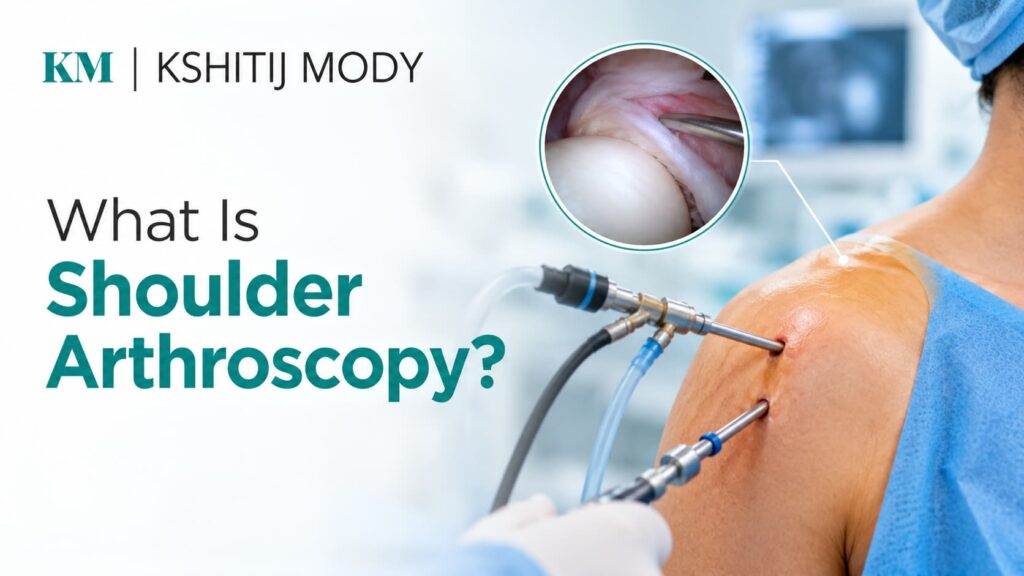
Shoulder pain can make everyday tasks such as combing your hair, lifting a bag, reaching a shelf, or even sleeping comfortably difficult. While many shoulder problems improve with rest, medication, injections, or physiotherapy, some conditions need a closer look inside the joint. Shoulder arthroscopy is a minimally invasive procedure that allows an orthopaedic surgeon to examine and treat selected shoulder problems through small incisions.
If you are looking for shoulder arthroscopy surgery in Vadodara, understanding what the procedure involves, when it is recommended, and how recovery works can help you make an informed decision with your surgeon.
Shoulder Arthroscopy Explained
Shoulder arthroscopy is a minimally invasive surgical technique in which an orthopaedic surgeon uses a small camera called an arthroscope to view the inside of the shoulder joint.
The arthroscope is inserted through a small incision around the shoulder. It has a light and a camera that sends magnified images to a monitor, allowing the surgeon to examine structures such as:
- Rotator cuff tendons
- Labrum (the cartilage rim of the socket)
- Articular cartilage
- Biceps tendon
- Joint lining (synovium)
- Ligaments and the space above the joint (subacromial space)
When treatment is needed, additional small instruments are passed through separate incisions to repair, release, or remove damaged tissue. Because the shoulder is not opened widely, arthroscopy usually involves less disruption to surrounding muscles and tissues than traditional open surgery.
Why Is Shoulder Arthroscopy Done?
Shoulder arthroscopy may be recommended when symptoms point to an internal shoulder problem that has not improved with non-surgical treatment, or when imaging shows a condition that needs repair. Common reasons include:
Rotator Cuff Tears
The rotator cuff is a group of tendons that stabilise and move the shoulder. Injury or age-related wear can cause partial or complete tears, leading to pain and weakness, especially when lifting the arm. Many tears can be treated with arthroscopic rotator cuff repair.
Shoulder Impingement
In impingement syndrome, tendons get pinched under the bony arch of the shoulder, causing pain with overhead movements. If conservative treatment fails, arthroscopy can be used to create more space and relieve the pressure.
Frozen Shoulder
Frozen shoulder causes pain and marked stiffness. When it does not respond to physiotherapy and other treatment, an arthroscopic frozen shoulder release may be considered to loosen the tight joint capsule.
Shoulder Dislocation and Instability
Repeated slipping or dislocation of the shoulder can tear the labrum and stretch the ligaments. In selected patients, especially young and active individuals, arthroscopy can be used to repair these structures and improve stability. You can read more about shoulder dislocation and its treatment options.
Labral Tears and Biceps Tendon Problems
Tears of the labrum or problems with the biceps tendon can cause pain, catching, clicking, or a feeling of instability. Arthroscopy allows the surgeon to see these injuries directly and treat them.
AC Joint Problems
The acromioclavicular (AC) joint sits at the top of the shoulder. Arthritis or injury here can cause pain on the top of the shoulder. Selected cases of AC joint arthropathy can be treated arthroscopically.
Loose Bodies and Joint Lining Problems
Small fragments of cartilage or bone, or inflamed joint lining, can sometimes be removed arthroscopically.
How Is Shoulder Arthroscopy Performed?
Before surgery, your orthopaedic surgeon will review your symptoms, medical history, physical examination, and imaging such as X-rays or MRI. Anaesthesia is then planned according to the procedure and your overall health.
During the procedure, the surgeon typically:
- Makes a small incision and inserts the arthroscope into the shoulder joint.
- Examines the joint and surrounding structures on a monitor.
- Makes additional small incisions for instruments if treatment is required.
- Repairs, releases, or removes damaged tissue as needed.
- Closes the small incisions and applies a dressing.
The exact steps and duration depend on the condition being treated. A simple procedure takes less time than a complex rotator cuff or instability repair.
Benefits of Shoulder Arthroscopy
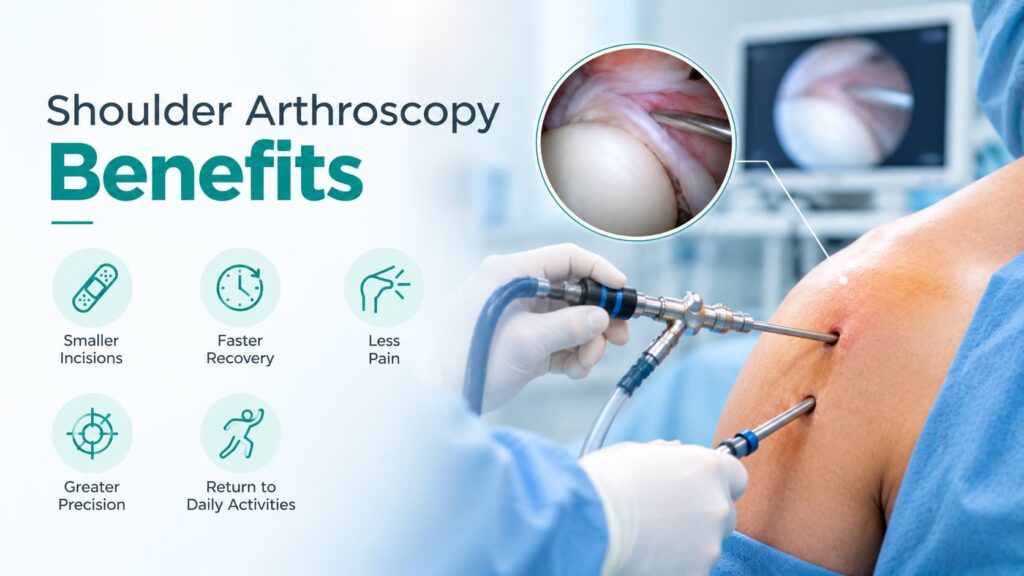
Potential benefits of shoulder arthroscopy can include:
- Smaller incisions and less visible scarring
- Less disruption to muscles and surrounding tissue
- Excellent, magnified view of the entire joint
- Ability to diagnose and treat several problems in the same sitting
- Potentially less early pain and faster early recovery than open surgery
Outcomes vary depending on the condition treated, the size of the injury, your age, and how closely you follow rehabilitation.
What Is Recovery Like After Shoulder Arthroscopy?
Recovery depends on the procedure performed. Many patients go home on the same day or after a short hospital stay, but the rehabilitation timeline can differ widely.
In general, recovery may include:
- A sling to protect the shoulder, especially after tendon or labrum repair
- Pain and swelling control with medication and ice
- Gentle early movement as advised by your surgeon
- A structured physiotherapy programme
- Gradual strengthening once the repair has healed enough
- Regular follow-up visits
Lighter procedures, such as decompression, may allow a return to daily activities sooner. Repairs such as a rotator cuff or labral repair need protection and a longer rehabilitation period, often several months before full strength and sports activity return. Always follow your surgeon’s specific instructions.
What Are the Possible Risks?
Shoulder arthroscopy is commonly performed and generally safe, but like any surgery it carries some risks. These can include infection, bleeding, stiffness, blood clots, nerve or blood vessel injury, anaesthesia-related complications, and persistent pain or re-tear of a repaired tendon. Your surgeon can explain the risks that apply to your health and the planned procedure before surgery.
Is Shoulder Arthroscopy Always the Answer?
No. Many shoulder problems improve with rest, medication, activity modification, physiotherapy, or injections, and arthroscopy is usually considered when these measures have not worked or when a structural injury needs repair. Some regenerative options, such as PRP therapy, may also be discussed in selected cases.
Arthroscopy is also not suitable for every shoulder condition. When arthritis has badly damaged the joint surfaces, or when a large rotator cuff tear has caused severe joint damage, treatment may involve total shoulder replacement or reverse shoulder replacement instead.
If you would like to understand how arthroscopy is used in another joint, you can read our guide on what knee arthroscopy is.
When Should You See a Shoulder Specialist in Vadodara?
Consider consulting an orthopaedic surgeon if shoulder pain is persistent, worsening, or interfering with daily life. Evaluation is especially important if you have:
- Shoulder pain that lasts more than a few weeks despite rest
- Pain at night that disturbs your sleep
- Weakness or difficulty lifting your arm
- Marked stiffness or loss of movement
- Repeated dislocation or a feeling that the shoulder slips out
- Clicking, catching, or locking
- Shoulder pain after a sports injury or fall
If you are searching for a shoulder arthroscopy specialist in Vadodara, Dr. Kshitij Mody offers consultation and treatment for shoulder conditions at Welcare Hospital, Atladara-Vadsar Road, Vadodara. Learn more about Dr. Kshitij Mody, or book an appointment for a detailed evaluation.
Final Thoughts
Shoulder arthroscopy is a minimally invasive technique that helps orthopaedic surgeons diagnose and treat selected problems inside the shoulder, including rotator cuff tears, impingement, frozen shoulder, labral tears, and shoulder instability. It is not the right treatment for every shoulder problem, and the decision should always be based on your symptoms, examination, imaging, age, and activity level.
If shoulder pain is limiting your movement or your sleep, an early assessment by an experienced orthopaedic surgeon in Vadodara can help find the cause and decide whether physiotherapy, injections, arthroscopy, or another treatment is the best option for you.
Frequently Asked Questions About Shoulder Arthroscopy
Is shoulder arthroscopy painful?
Some pain and swelling are expected after surgery. Pain is usually managed with medication, ice, rest, and a sling. Discomfort varies depending on the procedure performed and the individual patient.
How long does it take to recover from shoulder arthroscopy?
Recovery varies. Simple procedures may allow a return to daily activities within a few weeks, while rotator cuff or labral repairs can need several months of protection and rehabilitation before full strength returns.
Is shoulder arthroscopy a major surgery?
It is a minimally invasive technique, but the complexity depends on what is being treated. A diagnostic or decompression procedure is very different from a large rotator cuff repair or an instability repair.
Can shoulder arthroscopy treat arthritis?
Arthroscopy does not reverse arthritis. It may help in selected cases, for example when a separate problem such as a tear or loose body is present. Advanced arthritis may need other treatment, including shoulder replacement.
Is shoulder arthroscopy better than open surgery?
Arthroscopy has benefits such as smaller incisions and less tissue disruption, but the best approach depends on the condition. Some complex problems may still need open surgery. Your surgeon will recommend the safest and most effective option.
Who is the right candidate for shoulder arthroscopy?
Patients with a confirmed structural problem in the shoulder who have not improved with non-surgical treatment are usually considered. A detailed examination and imaging are needed to decide.
Where can I get shoulder arthroscopy surgery in Vadodara?
Dr. Kshitij Mody, Consultant Orthopaedic Surgeon, treats shoulder conditions at Welcare Hospital, Atladara-Vadsar Road, Atladara, Vadodara. You can contact the clinic to book a consultation.