
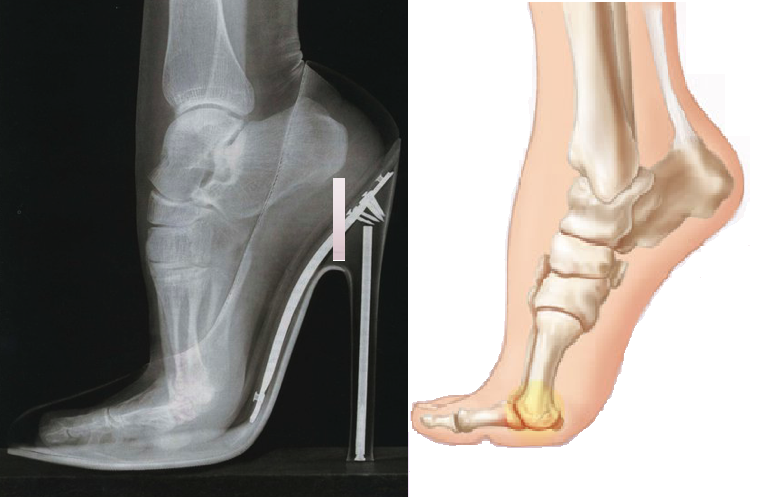
High Heels – High Risk of Aches & Pains
𝐖𝐡𝐢𝐜𝐡 𝐏𝐚𝐫𝐭𝐬 𝐨𝐟 𝐌𝐲 𝐁𝐨𝐝𝐲 𝐖𝐢𝐥𝐥 𝐁𝐞 𝐀𝐟𝐟𝐞𝐜𝐭𝐞𝐝 𝐛𝐲 𝐇𝐢𝐠𝐡 𝐇𝐞𝐞𝐥𝐬?
- Balls of the Feet & Toes
- Ankle Joints
- Achilles Tendon – stiffens with prolonged wear
- Knees – More susceptible to osteoarthritis
- Back – Heels decrease the spine’s ability to absorb shock, which may lead to back pain. The vertebrae of the lower back may compress.
𝐖𝐡𝐚𝐭 𝐊𝐢𝐧𝐝𝐬 𝐨𝐟 𝐅𝐨𝐨𝐭 𝐏𝐫𝐨𝐛𝐥𝐞𝐦𝐬 𝐂𝐚𝐧 𝐃𝐞𝐯𝐞𝐥𝐨𝐩 𝐟𝐫𝐨𝐦 𝐖𝐞𝐚𝐫𝐢𝐧𝐠 𝐇𝐢𝐠𝐡 𝐇𝐞𝐞𝐥𝐬?
- Corns
- Calluses
- Hammertoe
- Bunions
- Morton’s Neuroma
- Plantar Fasciitis
𝐇𝐨𝐰 𝐂𝐚𝐧 𝐈 𝐒𝐭𝐢𝐥𝐥 𝐖𝐞𝐚𝐫 𝐇𝐢𝐠𝐡 𝐇𝐞𝐞𝐥𝐬 𝐚𝐧𝐝 𝐌𝐚𝐢𝐧𝐭𝐚𝐢𝐧 𝐅𝐨𝐨𝐭 𝐇𝐞𝐚𝐥𝐭𝐡?
If you want to wear high heeled shoes, make sure that you are not wearing them every day, as this will help prevent long term physical problems.
Try wearing thicker heels as opposed to stilettos to distribute weight more evenly across the feet.
Always make sure you are wearing the proper shoes for the right occasion, such as sneakers for exercising.
If you walk to work, try carrying your heels with you and changing into them once you arrive at work.
Adding inserts to your heels can help cushion your feet and absorb shock. Full foot inserts or metatarsal pads are available.